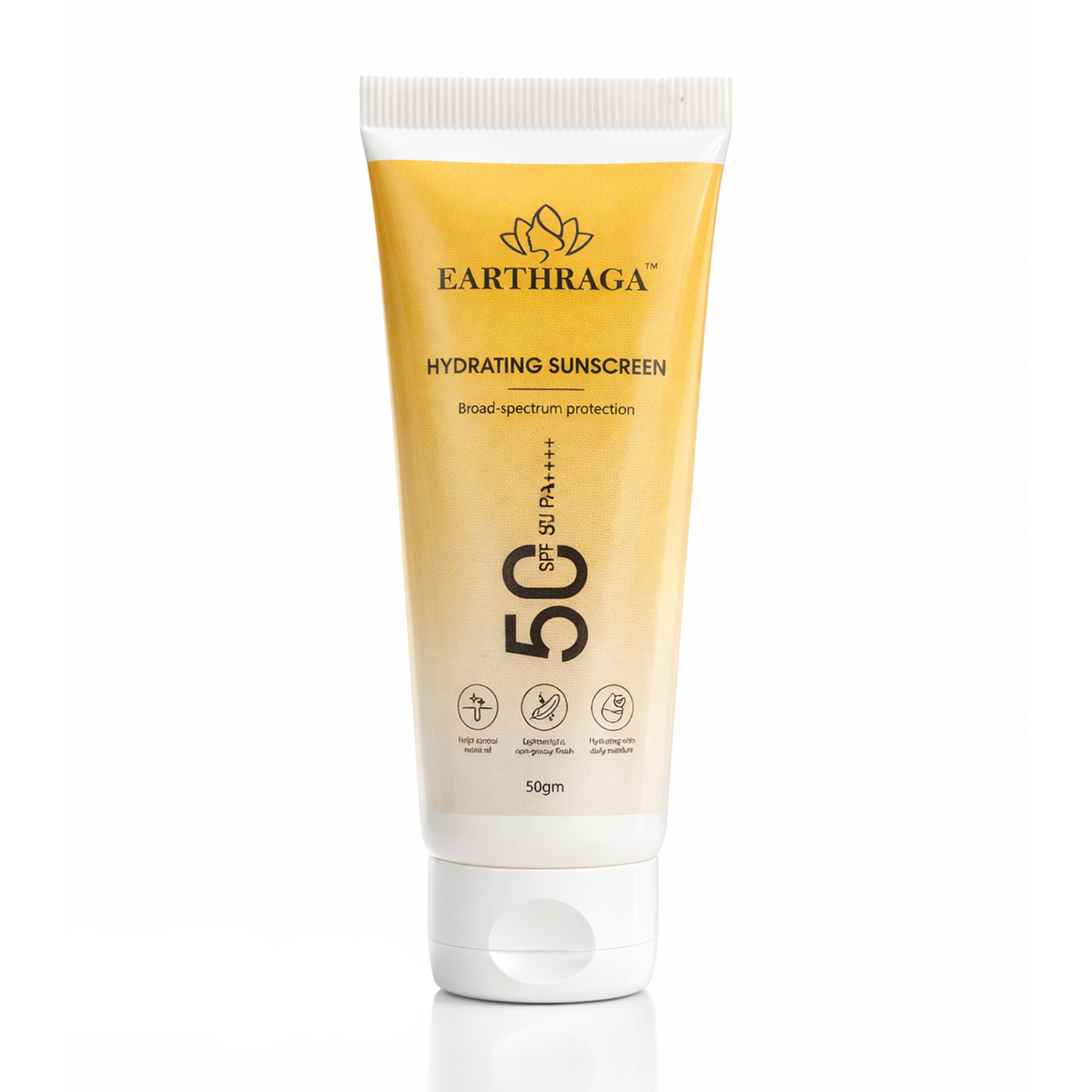
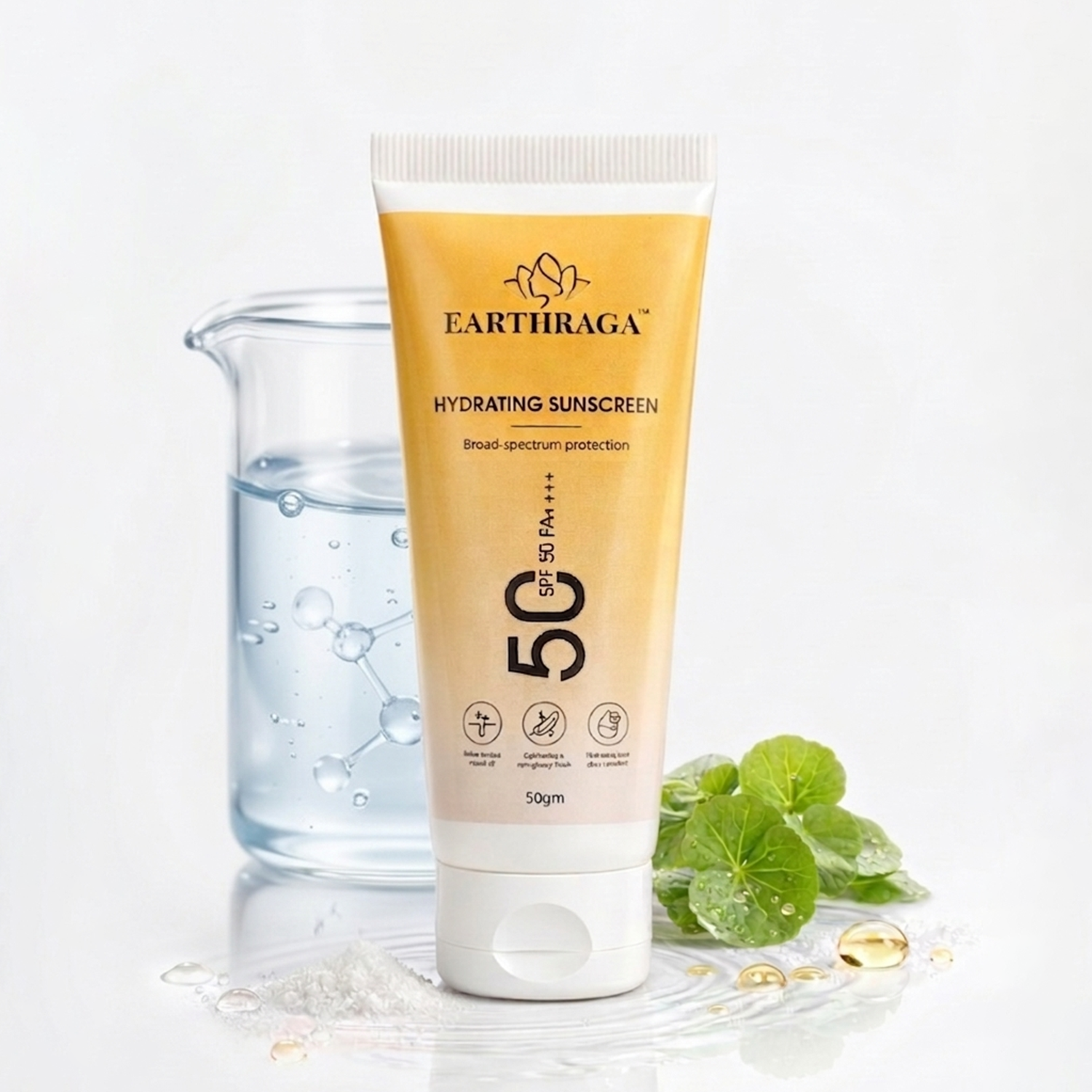
How Earthraga’s 3-in-1 Sunscreen Works — Three Layers in One Formula
Most of us have been there, applying a vitamin C serum, waiting, then a moisturiser, waiting again, and finally a sunscreen. By the time you're done, you've spent ten minutes and used three products just to leave the house. Earthraga's Hydrating Sunscreen SPF 50 PA++++ was built to fix exactly this. It collapses an entire routine into one lightweight step without cutting corners on performance.
Here's how the three layers work together in a single formula:
Layer 1 — The Serum (Treatment)
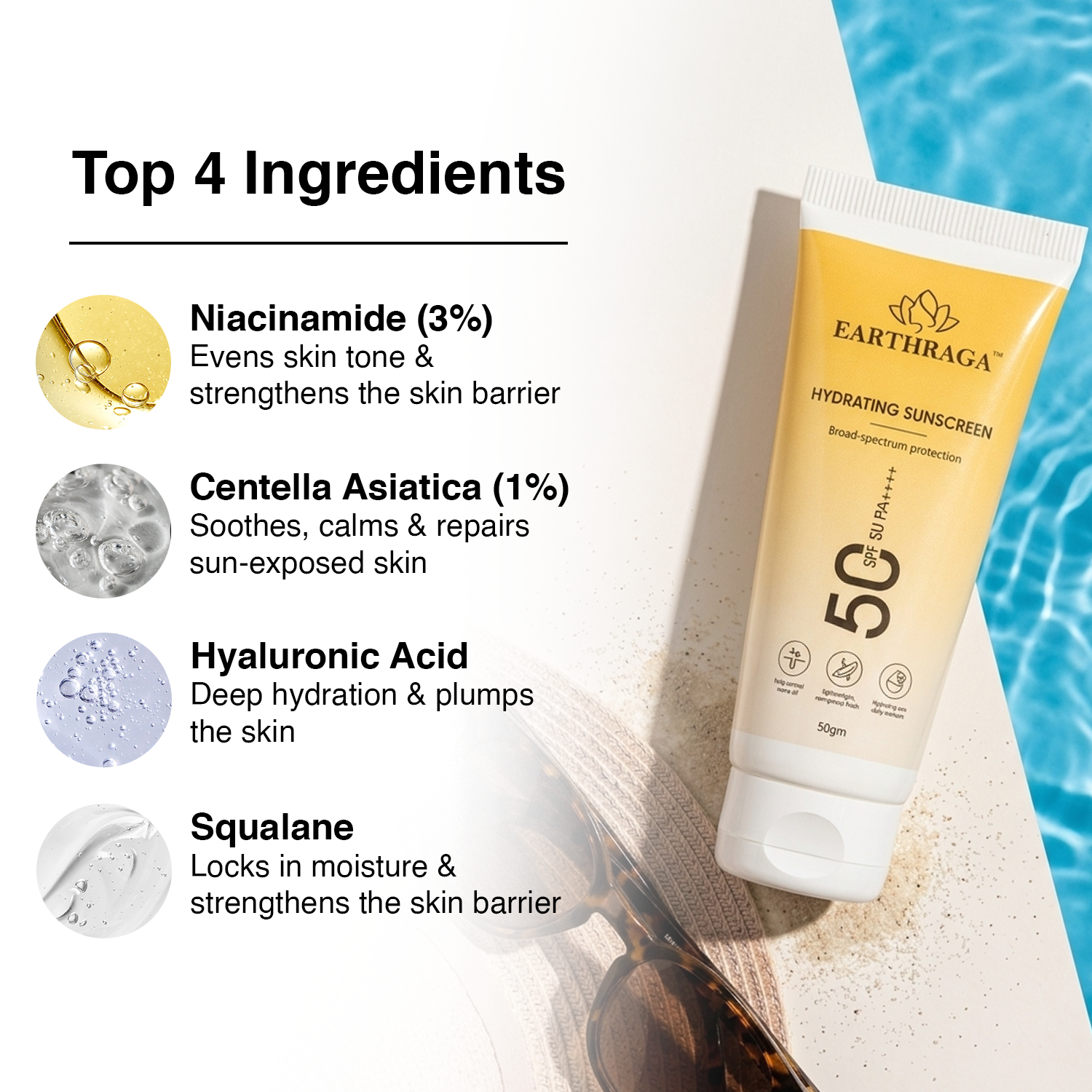
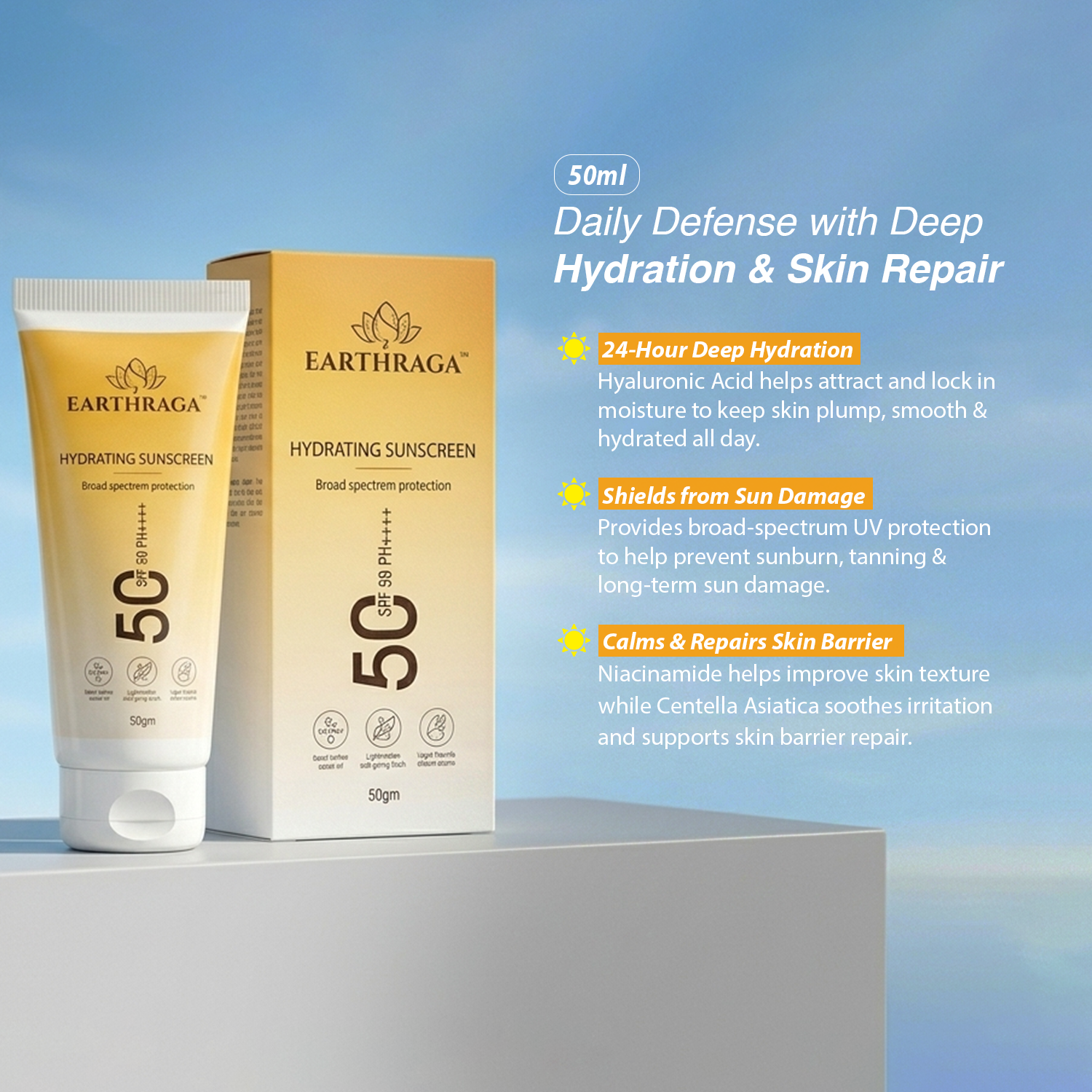
This layer delivers 3% Niacinamide and 1% Centella Extract directly to your skin. Niacinamide, also known as Vitamin B3, is one of the most well-researched actives in skincare. A 2005 study published in the International Journal of Dermatology found that 4 weeks of topical Niacinamide application significantly reduced sebum excretion rate, meaning it actively helps manage oil production throughout the day. At 3%, it's present in a functional, effective concentration, not just on the label for show.
Centella Extract (1%) brings soothing properties to the mix. Commonly used in dermatology for wound healing and inflammation, Centella asiatica has been shown in multiple studies to calm skin sensitivity and strengthen the skin barrier, making this formula particularly useful for anyone dealing with redness, irritation, or post-breakout recovery.
Layer 2 — The Moisturiser (Hydration)
This is where Hyaluronic Acid and Squalane come in. Hyaluronic Acid is a humectant that can hold up to 1,000 times its weight in water — it draws moisture into the skin and locks it in, keeping your skin plump without any greasy residue. Squalane, a plant-derived emollient, adds a layer of lightweight nourishment that reinforces the skin barrier and prevents transepidermal water loss (TEWL) — the invisible process by which your skin loses moisture to the environment.
Together, these two ingredients make this hydrating sunscreen lotion genuinely comfortable to wear — even during long days in Indian heat. There's no tightness, no dryness, no need to reach for a separate moisturiser.
Layer 3 — The Sunscreen (Protection)
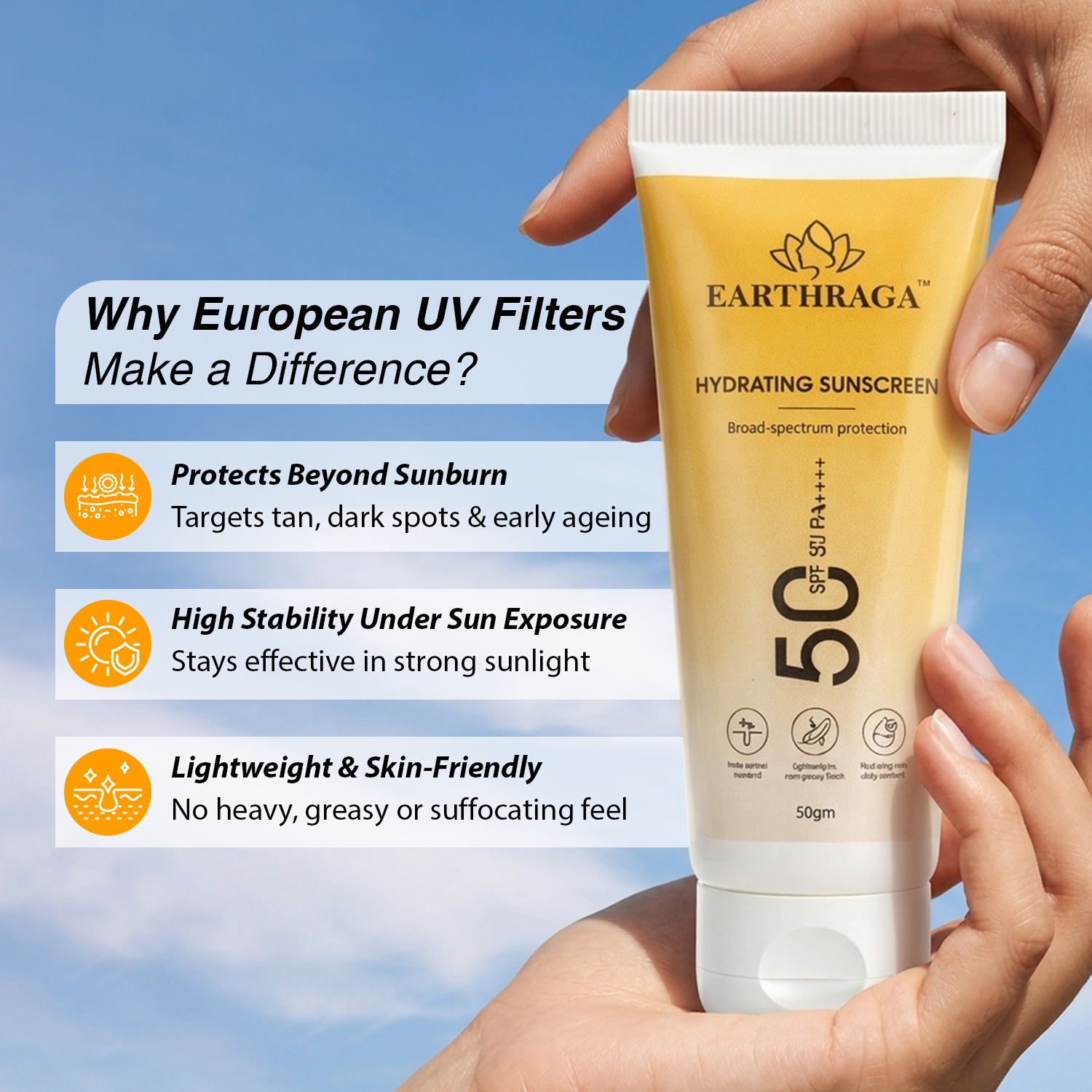
Advanced UV filters provide broad-spectrum protection against both UVA and UVB radiation at SPF 50 PA++++. This is the layer that actually does the sun-protecting work, and it does it without the hallmarks that make most people skip sunscreen entirely: no white cast, no chip-chip stickiness, no heaviness. The formula is designed to absorb quickly, leaving behind nothing but protected skin.
What Makes Earthraga Sunscreen White-Cast Free
The dreaded white cast is the number one reason people avoid sunscreens in India, especially those with deeper skin tones. It happens primarily with mineral sunscreens that use Zinc Oxide or Titanium Dioxide in high concentrations, which sit on the surface of the skin and scatter visible light.
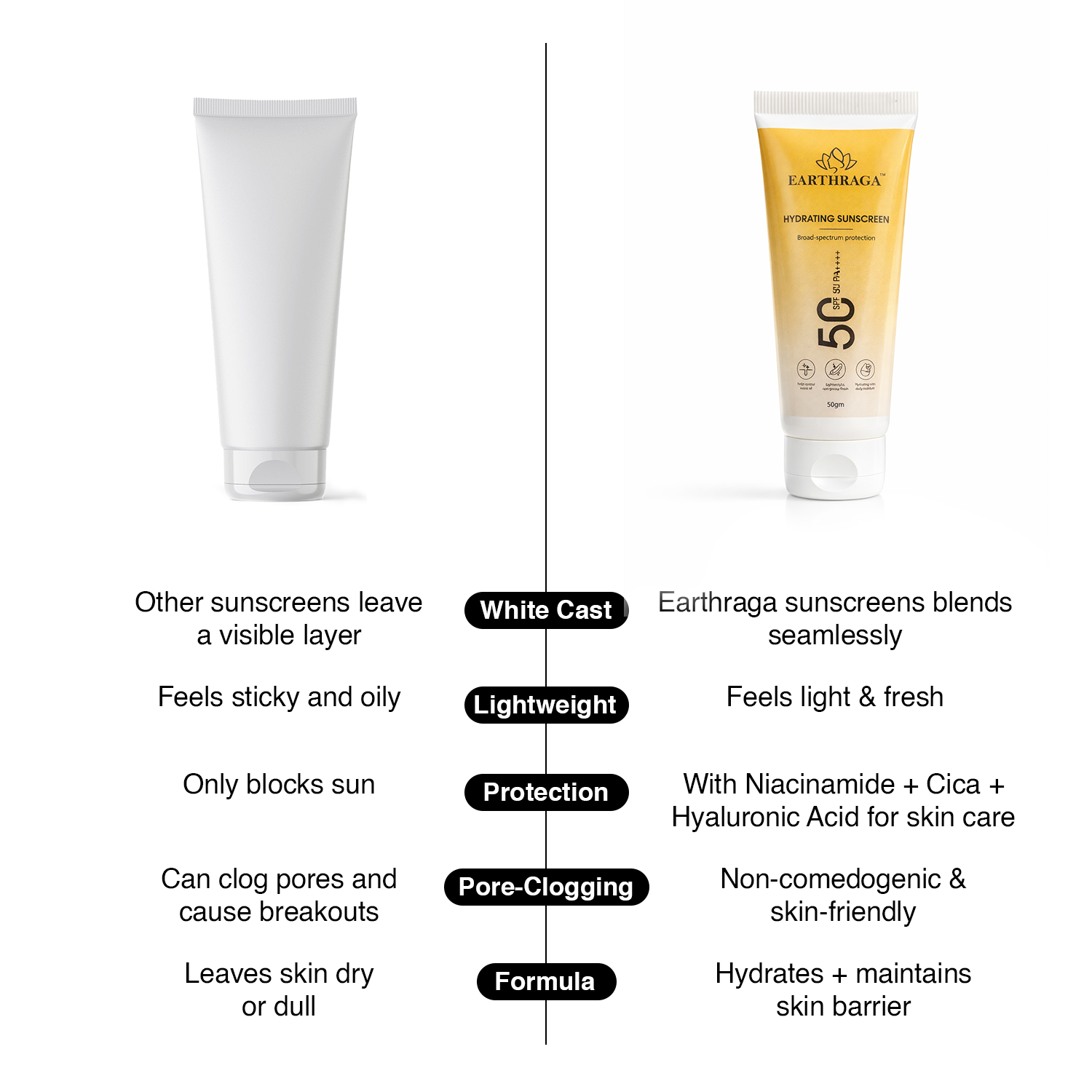
Earthraga's formula uses next-generation chemical UV filters that are designed to absorb UV radiation at a molecular level rather than physically block it. This means the formula blends seamlessly into the skin, leaving no chalky residue, no grey tint, and no compromise on protection. The result is a no white cast sunscreen that works across all Indian skin tones, from fair to deep brown, without looking ashy or heavy.
The lightweight, fast-absorbing base also means the formula never pills or leaves that film-like layer that makes some sunscreens feel uncomfortable under makeup.
Which Skin Types Can Use This Hydrating Sunscreen?
Short answer: all of them. Here's how it works for each:
Normal to Dry Skin
The Hyaluronic Acid and Squalane in this moisturiser with sunscreen SPF 50 give dry skin exactly what it needs, sustained, comfortable hydration without the need for an additional moisturiser underneath. Your skin stays soft and plump through the day.
Combination and Oily Skin
This is where Niacinamide does the heavy lifting. By regulating sebum production, it keeps the T-zone from going shiny mid-morning. The non-greasy, quick-absorbing texture means oily skin types won't feel like they've applied a second skin.
Acne-Prone and Sensitive Skin
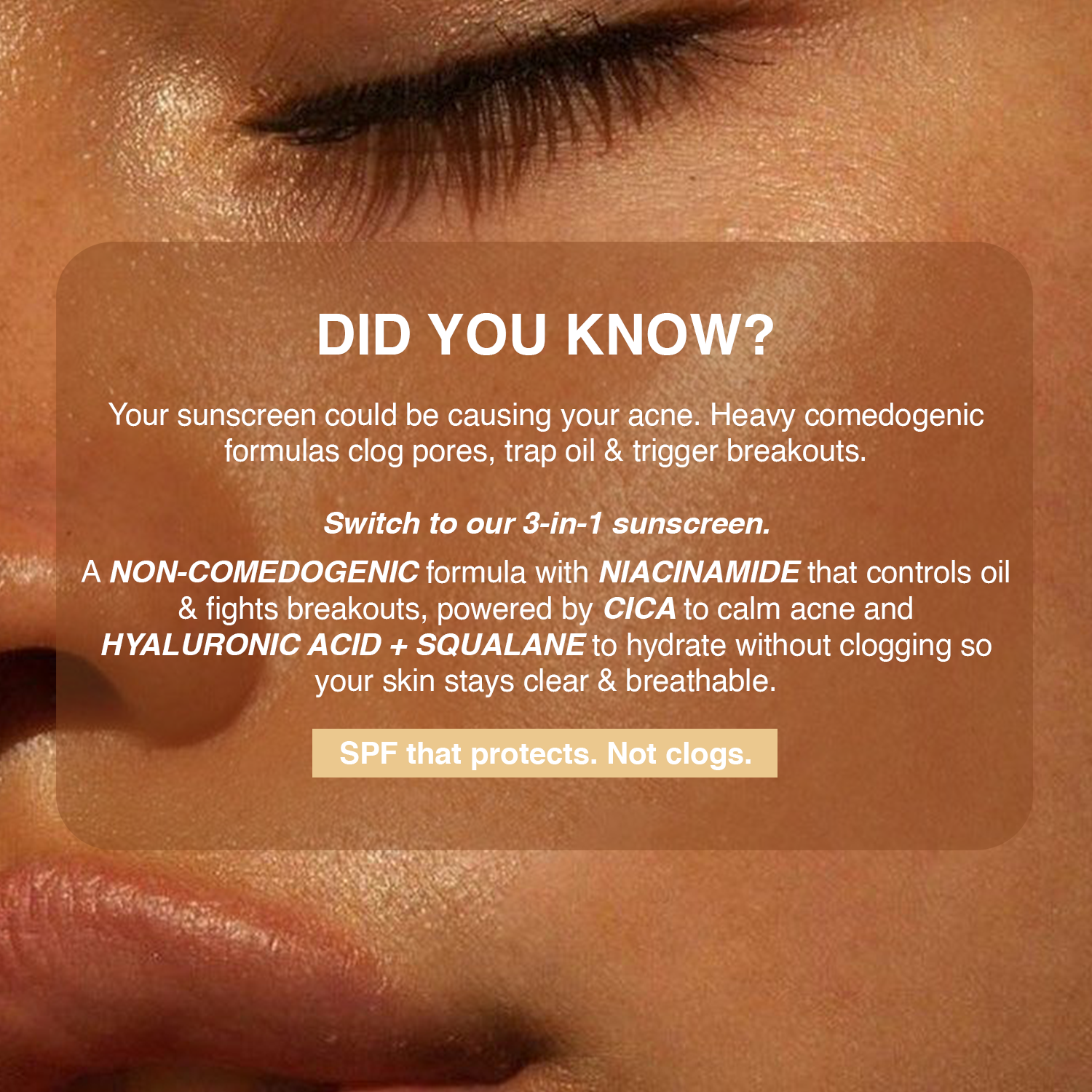
The formula is non-comedogenic, meaning it won't clog pores or trigger breakouts. Centella Extract calms inflammation, and the fragrance-free, carefully chosen ingredient list keeps the risk of irritation low. Dermatologists routinely recommend fragrance-free, non-comedogenic sunscreens for acne-prone skin, this formula ticks both boxes.
Skin Under Makeup
Because the formula absorbs completely without leaving a sticky or greasy film, it acts as a smooth primer base. Foundation, BB cream, and tinted moisturisers sit evenly on top with no pilling, no balling, and no interference with wear.
How to Apply This 3-in-1 Sunscreen — The Right Way
Because this replaces three products at once, your application step stays exactly the same, only simpler.
- Cleanse your face and pat dry.
- Take a pea-sized to nickel-sized amount (roughly 1/4 teaspoon for face and neck).
- Apply evenly across your face and neck, blending outward.
- Allow 15–20 minutes before sun exposure to let the UV filters fully activate.
- Reapply every 2 hours if you are outdoors, sweating, or after towelling off.
A quick note on quantity: most people underapply sunscreen, which significantly reduces its SPF efficacy. The SPF rating on a bottle is measured using 2 mg/cm² of product on the skin. Using less than that means you're getting less protection than the number promises. Don't be shy with it.
What's in the 3-in-1 Hydrating Sunscreen — Ingredients and What They Each Do
Niacinamide 3%
Niacinamide (Vitamin B3) is one of the most extensively studied topical actives. At 3%, it works to regulate sebaceous gland activity (reducing excess oil), strengthen the skin barrier by boosting ceramide production, and improve uneven skin tone over time. A 2004 study in the Journal of Cosmetic Dermatology found Niacinamide significantly improved the appearance of skin texture and hyperpigmentation with consistent use.
Centella Extract 1%
Centella asiatica, also known as Gotu Kola, has been used in traditional medicine for centuries and is now backed by modern dermatology. It contains asiaticoside, madecassoside, and asiatic acid — compounds known to promote collagen synthesis, reduce inflammation, and support barrier repair. At 1%, it provides meaningful calming and recovery support for skin that's been exposed to UV stress.
Hyaluronic Acid
A naturally occurring molecule in the skin, Hyaluronic Acid is the gold standard for surface hydration. As a humectant, it draws water from the environment into the outer layers of the skin, keeping the epidermis hydrated throughout the day. Its presence in this formula ensures that protection never comes at the cost of moisture, making it an effective hydrating sunscreen SPF 50 for daily use.
Squalane
Squalane is a stable, plant-derived analogue of squalene — a lipid your skin naturally produces. It mimics skin's own oils closely enough that it absorbs without feeling foreign, making it a non-comedogenic emollient that won't clog pores. It forms a protective film over the skin surface that locks in moisture without shine, making it ideal for this 3-in-1 structure.
Vitamin E + Alpha Glucosyl Rutin (Antioxidant Complex)
UV exposure generates free radicals in the skin — unstable molecules that break down collagen, accelerate ageing, and contribute to hyperpigmentation. Vitamin E (Tocopherol) is a fat-soluble antioxidant that neutralises free radicals and has been shown in research to enhance the photoprotective effect of sunscreens when combined with them. Alpha Glucosyl Rutin is a stabilised derivative of Rutin (a plant bioflavonoid) that offers additional antioxidant activity, helping to defend against oxidative stress caused by both UV and visible light.
What This Formula Does Not Contain
Earthraga's 3-in-1 Sunscreen is free from added fragrance, which is one of the most common triggers for contact dermatitis and sensitivity reactions in skincare products. It contains no parabens, no sulphates, and no unnecessary fillers. Every ingredient on the list has a function — there's no padding. This keeps the formula clean, minimal, and safer for daily, long-term use across all skin types.
SPF 50 and PA++++ — What These Numbers Mean for Your Skin
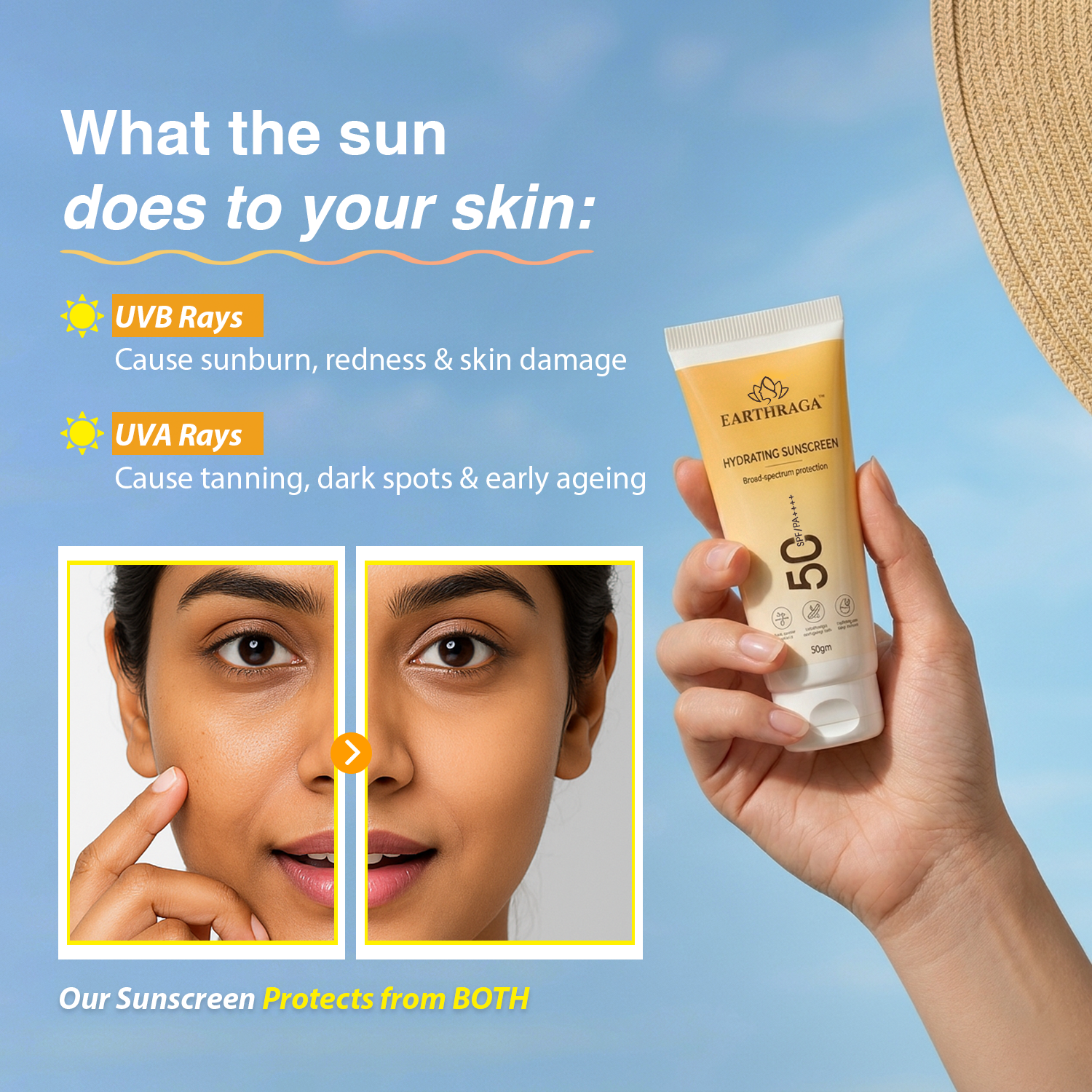
SPF, or Sun Protection Factor, measures how well a sunscreen protects against UVB rays — the type responsible for sunburn and a leading cause of skin cancer. SPF 50 blocks approximately 98% of UVB radiation, compared to 97% for SPF 30. That 1% difference might sound small, but for people in high-UV environments — like most of India — it translates into meaningful additional protection over cumulative daily exposure.
PA++++ is the Protection Grade of UVA system used widely in Asian markets. It measures protection against UVA rays — the longer-wavelength radiation that penetrates deeper into the skin, causing premature ageing, hyperpigmentation, and immune suppression. PA++++ represents the highest tier of UVA protection in this classification system, corresponding to a UVA Protection Factor (PFA) of 16 or more. For Indian skin, where concerns like melasma, dark spots, and tanning are common, strong UVA protection is as important as UVB coverage — if not more so.
Broad Spectrum — What It Means
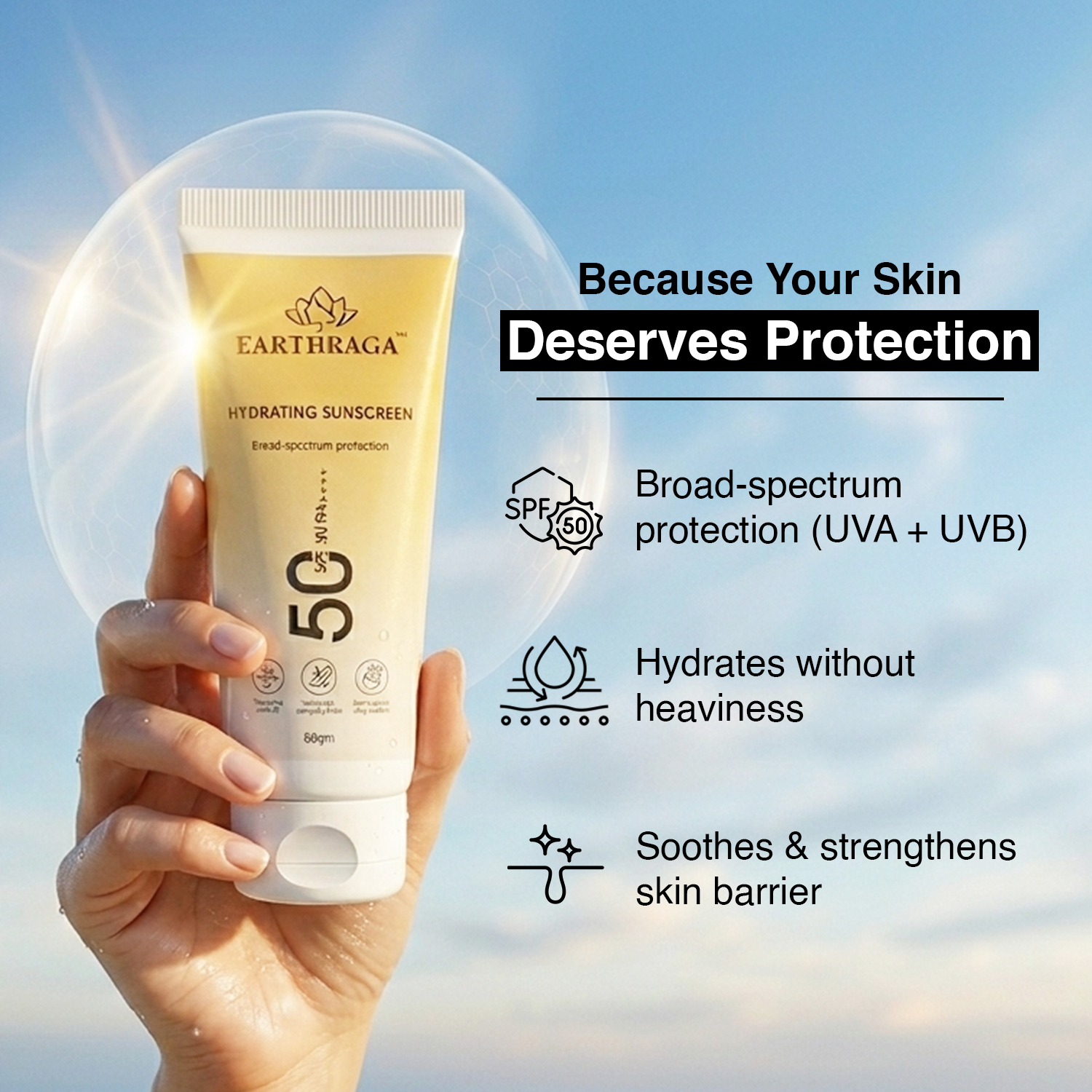
A "broad spectrum" sunscreen protects against both UVA and UVB rays — the full range of harmful solar radiation. This distinction matters because many older or cheaper sunscreens only block UVB (and only prevent sunburn), while UVA rays continue to age and damage the skin silently. The US FDA and dermatological bodies worldwide recommend broad spectrum protection as the baseline standard for daily sunscreen use.
Earthraga's formula meets the broad spectrum standard, meaning every time you apply it, you're protecting your skin from the full UV spectrum — not just the rays that cause redness.
7 Reasons to Pick Earthraga's 3-in-1 Hydrating Sunscreen
- One step replaces three: No more serum-moisturiser-sunscreen layering. This does the job of all three in a single, quick application.
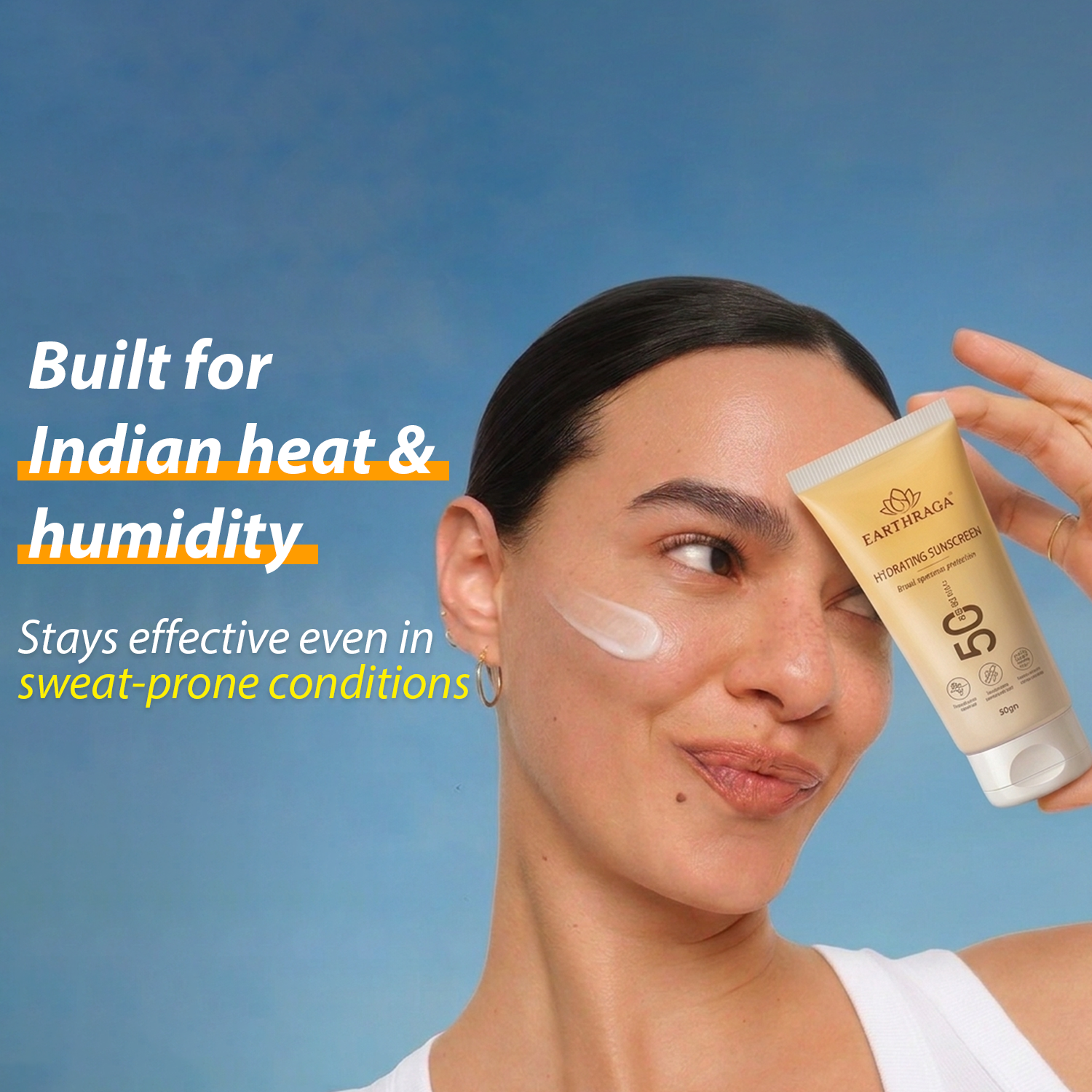
- Built for Indian weather: Lightweight, non-greasy, and designed to stay comfortable in high heat and humidity — not tested in lab conditions elsewhere.
- No white cast, on any skin tone: Advanced UV filters ensure complete invisibility on skin, making this genuinely usable as a no white cast sunscreen across all Indian complexions.
- Fragrance-free and non-comedogenic: Safe for sensitive, acne-prone skin. No added fragrance means no unnecessary irritation risk.
- Active skincare inside: Niacinamide and Centella aren't decorative. They're present at functional concentrations and actively improve skin over time.
- SPF 50 + PA++++ protection: Maximum rated UVA protection paired with 98% UVB filtration. The highest-tier combination available for daily wear.
- Makeup-friendly base: Absorbs cleanly and creates a smooth surface that lets makeup sit and stay, without pilling or interference.
How Earthraga Formulates Its Sunscreens
Earthraga approaches sunscreen formulation with two non-negotiable principles: efficacy and wearability. A sunscreen that doesn't get used is not protecting anyone. That's why every product is developed with the realities of daily Indian skincare in mind — the humidity of Mumbai, the dry heat of Rajasthan, the year-round UV load that most parts of the country experience.
Ingredients are selected based on documented clinical evidence, not trend. Concentrations are set at levels shown to be functional, not just visible on labels. The result is a product that earns trust — not through marketing language, but through measurable skin outcomes over consistent use.
The 3-in-1 Hydrating Sunscreen SPF 50 PA++++ represents Earthraga's answer to the most common reason people skip daily sunscreen: it's too much effort. One step. One product. Complete coverage.
All Questions Answered About Hydrating Sunscreen
Does this sunscreen really replace my moisturiser and serum?
Yes — for most people and most mornings. The formulation genuinely contains Hyaluronic Acid and Squalane at moisturising concentrations, and Niacinamide at a treatment-relevant 3%. If your skin has specific concerns that require targeted actives (like a prescription retinoid or a high-dose Vitamin C), you'd still apply those the night before or separately. But as a morning routine replacement, this covers all three bases.
Will this feel greasy or heavy in Indian heat and humidity?
No. The formula was developed with Indian climatic conditions in mind. The texture is deliberately lightweight, fast-absorbing, and non-greasy. Niacinamide also actively helps control sebum production through the day, which means your skin is less likely to feel oily by afternoon, not more.
Will this sunscreen cause breakouts or clog pores?
The formula is non-comedogenic — meaning it has been formulated to avoid blocking pores. Additionally, Niacinamide is known to support barrier function and reduce inflammatory activity, and Centella Extract has documented anti-inflammatory properties. If you have acne-prone skin and have previously struggled with sunscreens causing breakouts, the composition of this formula is designed to reduce that risk.
Can I apply makeup over this sunscreen?
Yes. The formula absorbs quickly and leaves a smooth, dry finish that works as a base. Wait approximately 2–3 minutes for full absorption before applying foundation or tinted moisturiser, and your makeup will sit evenly without pilling.
How is this different from regular sunscreen?
A regular sunscreen protects. This one protects, hydrates, and treats. The difference isn't just about convenience — it's about what your skin gets from the product. Standard sunscreens typically contain UV filters and little else. This formula layers Niacinamide, Centella, Hyaluronic Acid, Squalane, and an antioxidant complex on top of broad-spectrum SPF 50 PA++++ coverage. It's a fundamentally more complete product.
Is SPF 50 necessary, or is SPF 30 enough for Indian conditions?
The Indian Dermatology Online Journal and international dermatological bodies including the American Academy of Dermatology recommend SPF 30 as the minimum for daily use. However, for India's UV Index — which regularly reaches 10–11 (Very High to Extreme) in summer months — SPF 50 is the more protective, more appropriate choice. Concerns like melasma, post-inflammatory hyperpigmentation, and early photoageing are significantly more common in high-UV environments, making maximum protection a sensible daily habit.
Trending Products at Earthraga - Retinol Night Cream | Retinol Scrub | Niacinamide Hydrating Lotion | Glow Moisturizer | Hydrating Sunscreen | Daily Cleanser for Acne | Night Cream | Body Lotion | After Shave Gel